See how your team actually operates when the stakes rise,
and build the skills to perform together when it counts.
The first: they’ve done the WE-I themselves. Suddenly they see their team differently. In every meeting, every hard conversation, every moment the team goes quiet, they recognize what’s happening and why. Once you see it, you can’t unsee it.
The second: they lead a strong team and want more from it. A growth phase is coming, the stakes are rising, or they simply know the team has another level. They want it ready before the pressure arrives, not after.
Either way, this is where it starts.


Six months after this work, something is different in the room.
The team shares a language for what happens under pressure. When someone goes quiet in a meeting, someone else asks an open question. When conflict comes up, the team works through it right there, instead of avoiding it or letting it fester.
Each leader knows what drives their own reactions under pressure, so they catch themselves sooner and show up differently.
The team knows its pattern too: the gifts to lean on, the blind spots, and where there’s room to grow. So when a blind spot shows up in the moment, they catch it, and the conversation shifts from defensiveness to possibility.
Pressure stops being something each person handles privately. The team handles it together, and well.
That’s not a workshop outcome. That’s how high-performing teams operate.

Psychological safety doesn’t come from a policy. It comes from leaders who create it in every conversation, every meeting, every moment someone takes a risk and speaks up.
It starts with one skill: curiosity. Staying open, asking better questions, and responding to pressure in a way that makes it safe for everyone else to do the same.
One leader who does this changes every room they’re in. Multiply that across a senior team, and it shapes whether your best people stay, your best ideas surface, and your team learns from mistakes instead of hiding them.
That’s what high-performing teams are built on: a learning culture, where getting it wrong is how people get better.
Three ways to bring this work to your team, each building on the last.
Every team member does a WE-I Profile and a personal debrief. Then the team gathers, using fully anonymous collective data, to see how their patterns fit together.
Everything in See It + Understand It, plus a half-day Curious Conversation workshop built entirely from your team’s results.
Everything in Change It, then we come back, build on what’s working, and go deeper until the skills are simply how the team operates.

This isn’t an off-the-shelf methodology. Every engagement is built from your team’s real data: the specific patterns, strengths, and friction points the WE-I reveals. No two engagements look the same, because no two teams are the same.
I pair the WE-I Profile with the Curiosity Skills and Curious Conversation Framework, the Institute of Curiosity’s proprietary method, developed over fifteen years.
Thirty minutes. An honest look at where your team is, where you want it to be, and whether this is the right way to get there. No pitch, no pressure.
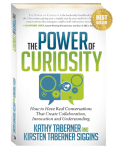
The idea of curiosity as a leadership practice started with Kathy Taberner, my mum and co-author of The Power of Curiosity. Together we spent fifteen years turning it into the Curiosity Skills and Curious Conversation Framework. Kathy has since retired; the work continues here.

Teams that are already good and want to perform better together under pressure. It works best when the leader chooses this work and goes first, not when it’s brought in to fix someone. If you’re looking for a quick fix for a team in crisis, this probably isn’t the right starting point.
An offsite builds energy for a day. It can’t show you how each person actually shows up under pressure, and that’s what decides what happens back in the room three weeks later. This work starts with that data, then builds the exact skills your team needs for the conversations that matter most.
DiSC and Myers-Briggs measure personality and communication style in calm, self-reported conditions. The WE-I Profile measures what happens inside each person under pressure: the patterns running beneath the surface when the stakes are real.
The Institute of Curiosity’s proprietary method, developed over fifteen years: a simple three-step system for staying regulated, asking better questions, and handling high-stakes conversations under pressure.
Each team member’s WE-I Profile and one-on-one debrief can be done virtually. The team data reveal and workshops are in person; the work is too interactive to lose people to a screen.
Leadership Development for High-Pressure Moments.
Curiosity, emotional intelligence, and Curious Conversations for leaders who want to be at their best when it matters most.
Virtual for leaders. In person for teams.
Copyright © 2026 Institute Of Curiosity. All rights reserved